Before You Say Yes: The Questions Every Creator Should Ask Before Partnering Up
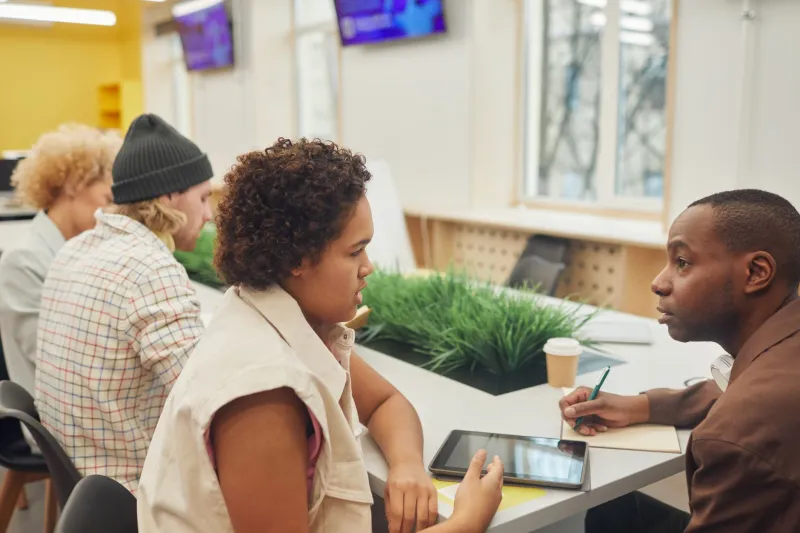
The pitch sounds great. The energy in the room is electric. You've admired their work for a while, and they clearly know what they're doing. So you shake hands — metaphorically or literally — and get to work.
Three months later, you're in a group chat that's gone passive-aggressive, missing a deadline because nobody agreed on who owned what, and quietly wondering how something that felt so right turned into this.
Sound familiar? Because it happens constantly. And almost every time, the warning signs were there in the first conversation — they just weren't the right conversations.
The Talent Trap
Here's the mistake most creators make: they evaluate potential collaborators almost entirely on the quality of their output. Makes sense on the surface. You want to work with good people. But creative talent and working compatibility are two completely separate things, and conflating them is where the trouble starts.
Someone can be genuinely brilliant and also have a completely different definition of "done." They can be wildly creative and also allergic to deadlines. They can have an audience you'd love to reach and also have risk tolerance that's about 180 degrees from yours. None of those things make them a bad creator. They make them a potentially bad fit for you.
The due diligence phase of a collaboration is not about vetting someone's talent. It's about understanding how they operate — and being honest about whether that works with how you operate.
The Conversations Nobody Has
Most pre-collaboration conversations are essentially extended pitching. Both parties are selling themselves, the project sounds exciting, and everyone's on their best behavior. That's not a due diligence conversation. That's a first date.
Here are the actual questions that matter — and that most people wait too long to ask.
What does success look like to you, specifically?
This one sounds simple and is genuinely illuminating. Ask it and then actually listen. If your answer is "building a long-term audience together" and theirs is "a strong launch week and some good press," you are not aligned. Neither answer is wrong. But if you don't surface that difference early, you'll spend the entire project working toward different goals without realizing it.
How do you handle a decision when we disagree?
Every collaboration hits a moment where two people want different things. How that moment gets resolved — or doesn't — determines whether the project survives. Ask this directly. If the answer is vague or involves a lot of "we'll figure it out," that's a yellow flag. You want to know if there's a decision-making framework or if every disagreement is going to be a negotiation from scratch.
What's your relationship with deadlines?
This one's worth asking plainly, without softening it. Some creators are deadline-driven. Others treat timelines as suggestions. Both modes can produce great work — but if you're the former and they're the latter, every single milestone is going to be a source of friction. Know this before you're six weeks in.
Who owns what if this doesn't work out?
Uncomfortable to bring up early. Absolutely necessary. What happens to the IP, the content, the audience you've collectively built if the partnership dissolves? Having this conversation before there's anything at stake is a hundred times easier than having it when there's something to lose. Creators who skip this conversation are betting that things will work out. Sometimes they do. When they don't, the fallout is brutal.
What does your audience expect from you that mine might not expect from me?
This one gets overlooked constantly. Every creator has an implicit contract with their audience — a set of expectations built over time about what they'll deliver, what they'll stand for, what they won't do. When two creators collaborate, those contracts interact. Sometimes they're compatible. Sometimes they create real tension. A creator known for family-friendly content partnering with someone whose brand is edgy and unfiltered isn't just a creative mismatch — it's a potential audience trust problem for both parties.
Red Flags in Disguise
Beyond the direct questions, there are behavioral signals worth watching in the early stages of any collaboration conversation.
They're vague about past partnerships. If someone glosses over why previous collaborations ended or pivots quickly when you ask about them, pay attention. You don't need a full debrief, but a healthy creative professional can usually speak honestly about what worked and what didn't in past partnerships. Vagueness here often means the lessons weren't learned.
Their enthusiasm is all about the launch, not the work. Some collaborators are genuinely excited about the process — the creative problem-solving, the production, the iteration. Others are primarily excited about the announcement, the press, the moment of release. There's nothing wrong with caring about the business side, but if someone's energy drops noticeably when the conversation shifts from "what this could be" to "how we'd actually make it," that's worth noting.
They can't describe their audience in specific terms. This sounds like a business thing, but it's actually a creative alignment thing. A collaborator who knows their audience well can tell you exactly what those people respond to, what they'd push back on, and how a joint project would land with them. A collaborator who describes their audience in vague, aspirational terms often hasn't done the work of understanding the relationship they've built — and that matters when you're asking both audiences to trust something new.
Risk tolerance mismatch. This one's subtle but significant. Ask what they'd be willing to risk for this project — budget, reputation, time. The answer tells you a lot about how much skin they actually have in the game and whether their commitment matches their enthusiasm.
A Pre-Collaboration Checklist
Before you move forward on any partnership, run through this:
- We've defined what success looks like in specific, measurable terms — and we agree
- We've talked through a decision-making process for disagreements
- We've discussed timeline expectations honestly
- We have a basic understanding of IP and content ownership
- We've talked about how our audiences might interact and where friction could emerge
- I've asked about past collaborations and got a real answer
- We've discussed what "out" looks like if this stops working
None of this is about distrust. It's about respect — for the project, for each other, and for the audiences you're both accountable to.
The Upside of Doing This Right
Here's the thing: creators who do this work upfront don't just avoid bad partnerships. They build better ones. Because when you've had the real conversations before the project starts, you show up to the work already aligned. There's no ambiguity about who's responsible for what. There's no unspoken assumption waiting to become a blowup.
The best creative partnerships aren't the ones where everything goes smoothly because nothing was ever tested. They're the ones where the foundation was solid enough to hold when things inevitably got complicated.
Talent gets you in the room. Compatibility keeps you there.